
The Interruption
There was a stretch of time where dinner felt like an interruption.
Not a pleasure. Not a ritual. An interruption.
I’d be mid-task—half-lost in some browser tab hell, half-anxious about the next thing I hadn’t done yet—and I’d glance at the clock and feel this weird irritation: Already? I haven’t earned food yet.
That’s how warped my head had gotten. Food wasn’t nourishment. It was a reward. Or worse, a distraction I needed to minimize.
Optimization Brain
So I optimized it. Like everything else.
Meal prep. Protein shakes. Bland but “efficient” stir-fries made with whatever spice blend was closest to the stove. I ate standing up. I ate scrolling. I ate without tasting.
And here’s the thing no one really tells you: when you live like that long enough, your life starts tasting the same way your food does.
Flat. Functional. Forgettable.
The Drift
I didn’t notice the shift right away. You never do.
You think you’re being disciplined. You think you’re being serious about your goals. You think this is just what adulthood looks like—tight margins, clean macros, no romance.
But under that surface efficiency, something quieter was happening.
I was losing my sense of choice.
Small Choices
Not the big choices—the “career” ones, the “identity” ones.
I mean the tiny, daily decisions that remind you you’re still alive and not just executing a script.
What do I want to eat?
How do I want it to taste?
Do I want heat today? Or warmth? Or bitterness? Or comfort?
Those questions had vanished. And without realizing it, I’d trained myself to stop asking them.
The Moment
The breaking point was stupidly small.
I remember standing in my kitchen one night, staring at a pan of chicken that looked exactly like the chicken I’d cooked a hundred times before. Same color. Same smell. Same deadness.
I took a bite and felt nothing. Not disgust. Not pleasure. Just… compliance.
And I thought, If this is how I’m feeding myself, no wonder everything else feels thin.
When you numb your senses to save time, you don’t just save time—you flatten your life.
A Rule
That was the night I decided to stop “optimizing” dinner.
Not to become a chef. Not to post plates on Instagram. Just to feel something again.
I didn’t start with recipes.
I started with a rule:
One ingredient at a time, done well.
Flavor Fatigue
No more dumping generic spice blends into everything. No more assuming “salt and pepper” was enough just because it was efficient.
I wanted ingredients that actually carried a point of view.
That’s how I stumbled onto Burlap & Barrel.
Not through some ad promising transformation. Not through a “top 10 spices” list.
From Somewhere
I was reading about food origins one night—half procrastination, half curiosity—and their name kept coming up in places that didn’t feel like marketing.
Farmers’ names. Regions. Harvest seasons.
It didn’t feel like a brand screaming at me.
It felt like someone quietly saying, “This came from somewhere.”
Black Pepper
The first thing I ordered wasn’t exotic.
Black pepper.
Which sounds ridiculous until you realize most of us have never actually tasted black pepper. We’ve tasted dust that smells vaguely sharp.
The first time I cracked theirs over eggs, I actually stopped mid-motion.
It was brighter. Warmer. Almost citrusy.
Not loud—just alive.
The Real Shift
This is where the real shift happened, and it had nothing to do with cooking.
I realized I’d been measuring my life with the wrong ruler.
Everything was judged by output per unit of time.
Work faster. Eat faster. Recover faster. Repeat.
Sensory Debt
That metric ignores something dangerous: sensory debt.
When you rush through experiences meant to be felt—food, rest, silence—you don’t just skip pleasure.
You accumulate dullness.
And that dullness leaks.
Into your motivation. Your curiosity. Your resilience.
A New Metric
So I changed the question.
Instead of asking, “Is this efficient?” I started asking, “Is this alive?”
Does it wake something up?
Does it resist me a little?
In Practice
Burlap & Barrel fit into that shift naturally.
You don’t dump these spices in mindlessly.
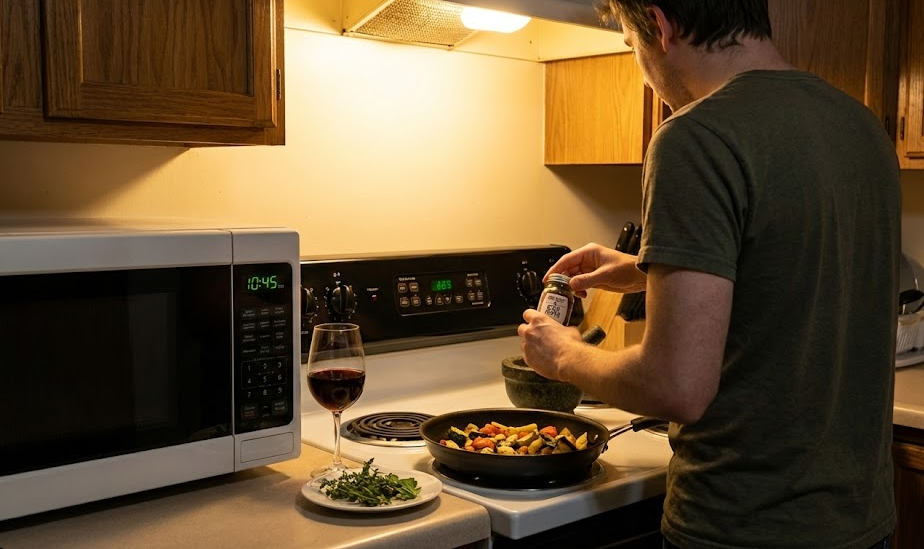
You smell them. You adjust. You taste again.
They punish autopilot.
Fewer Things
I cook fewer dishes now, but I care about them more.
Roasted vegetables with one spice, chosen deliberately.
Rice cooked plain, finished carefully.
Eggs that taste different depending on how awake I am.
Small meals. Sharp attention.
The Spillover
Once you reintroduce choice at the sensory level, it spills upward.
You notice when work feels dead.
You stop forcing routines that technically “work” but quietly drain you.
Attention is the real currency. Flavor just teaches you how to spend it.
Not A Fix
I’m not saying spices will fix your life.
I am saying the way you treat repeatable moments says more about you than your ambitions ever will.
Anyone can grind through a sprint fueled by caffeine and contempt.
Building a life you can stay inside takes another kind of seriousness.
The Reset
These days, dinner isn’t an interruption.
It’s a reset.
A reminder that I’m not a machine optimizing throughput.
I’m a human with senses, preferences, and a finite amount of attention.
If I’m going to work hard, I want to eat like someone who plans to stick around.
If that resonates, this is the spice drawer I rebuilt my kitchen around.